Happy Sacred Sunday!
A couple of years before my father died, my husband and I were sitting in our living room having a “date night” while our three toddlers slept upstairs. We got to talking about my dad, and my husband confessed he didn’t understand our relationship. “You two are so close and yet it seems like your dad wasn’t around too much when you were growing up. I just don’t get it.”
That’s when I decided to show him the box.
The box I had kept with me all of my life, tucked on a shelf in a closet, no matter where I lived. It was the box of postcards my dad sent me from all over the world.
As we sat there reading the postcards, laughing and even crying a few times, my husband shared an idea.
“What if you two wrote a book about how to be there even when you’re not? You could teach divorced dads or working moms how to create meaningful relationships with their kids even if they’re not physically present.”
We presented this idea to my dad and eventually got him excited about it.
We hired a ghostwriter, put a book proposal together, and even came up with a title. Love, Dad.
But my father got too sick too fast, and our dream of writing this book took a back seat to managing his care.
One day my dad said to me, “About the book my love, whether you publish it or don’t publish it, it doesn’t matter. Our story is already written. That’s what really matters.”
After he died, I set out to finish the book, but I couldn’t pull it together. The format we had chosen didn’t work without him, and even though I was sharing our story in keynote speeches and writing about him … something about the book felt like it wasn’t mine.
One time I gave a speech and a friend of mine listened to it. She called me afterward and said, “I have to tell you something that is hard to say.”
“Go for it.” I braced myself.
“I think you talk too much about your dad in your speech. It’s like you’re telling his story, not yours. And you have so much value to give on your own. It’s like you’re trying to stay in his shadow because you don’t want anyone to forget him. But if this is going to be your career, you need to carve your own path.”
I sat with her advice and ran it by a couple of my mentors. They told me she was right. And I knew it, too, deep down inside.
It was then that I finally put the Love, Dad manuscript away.
I’ve spent the last few years developing my own work and carving my own path.
But lately our story has been resurfacing, and although the story hasn’t changed, the narrator has.
I don’t share this story anymore as a little girl grieving her dad and making sure no one forgets him. I share it as a woman whose life was built on that story, and who can see it now from a different perspective.
You have a story like this. A story you’ve told the same way for years. A story you think defines who you are now, or a story you’ve been trying to forget.
Maybe it’s a dream, a goal, or a project you put away, and you’ve never let yourself ask whether it was actually finished or just abandoned.Here’
s what I want you to notice. The story isn’t the problem. It’s the identity you held on to through that story.
Because when the narrator changes, the story becomes useful, too. It stops being the thing that explains you and starts being the thing you’ve built on.
This week on the podcast I’m sharing what my dad taught me about designing a life. The Bliss’n Up theme for July is Design July, and these postcards turned out to be more relevant than I expected.
If I’ve been in your inbox for a while, you may know about the postcards. But I’ve never shared the insights that I talked about on this episode anywhere before.
Love, Dad was not the book I was meant to write. But it was the foundation for the stories I tell today.
You don’t always get to decide what happens to you, but you can always choose what you make it mean. And design around that.
By the way, I’d love to know if you picked your theme for July? Did you adopt the collective Design theme, or did you name your own?
Hit reply and tell me.
Sending you so much love today and always,


Aligned action
Happy Sacred Sunday!
It’s the first Sacred Sunday of July, and if you’re in the United States, it’s the Fourth of July weekend. I hope you’ve spent the holiday relaxing and enjoying time with friends and family, celebrating our country’s 250th birthday.
Today is also an important day for our Bliss’n Up community, because it’s the day we name our intention for the month.
If you’re new here, every month we carve out a little time to:
Notice: Our successes of the past month. What worked? What didn’t? What do we want to carry into the next month? What do we want to release and leave behind?
Name: Our theme and intention for the upcoming month. What do we want to focus on? What energy or identity do we want to step into? What’s one thing we can focus on this month that supports our word of the year?
This exercise sets us up perfectly for the most important part of our living with intention framework, which is:
Nurture: Using our thoughts, habits, and actions to nurture the intention we set each month, get off autopilot, and align our lives with our dreams and desires.
Just recently I was walking with a client who joined my Well community in 2025 and has spent the last year following this framework. Let’s call her Suzy. Suzy has so much fire within her. She has more ideas, desires, goals, and dreams than she knows what to do with. Her potential is limitless, but for years she struggled with clarity, distraction, and limiting beliefs.
But suddenly I’ve seen a shift. A sense of direction. Momentum. Execution.
I see her following through on projects she only used to dream about. She has stopped waiting for the perfect plan, or “clarity,” and instead is taking action on things that excite her. She is having fun instead of questioning herself.
During the walk, we were doing some success filing and she said, “Caro, I noticed that the thing that made the biggest difference this year for me was the NNN framework. As I looked through my journal recently, I realized that having that container to come back to each week and realign, remember, and nurture one intention at a time changed everything. It held me accountable and kept me focused on small progress instead of the overwhelming big picture that is too vague and intangible.”
I’ve witnessed this change in my clients many times, and I have to tell you, it is the most fulfilling and rewarding part of my work
Because I know that big lives are built one day at a time, one decision after another, compounding over time until the momentum generates a quantum leap.
So on this Sacred Sunday, I invite you to participate in this exercise. Tune into this week’s episode and let’s do it together.
And if you already named your theme for the month (during our Well call last week, in your 1:1 session with me, or on your own time), I invite you to spend a little time today reflecting on how the theme you chose is expanding its meaning and taking on a life of its own.
That’s what I’m doing today. Next week I want to share something personal I’ve been sitting with, about this month’s theme and my own life.
Sending you so much love, today and always,
P.S. If you’re ready to go deeper into this rhythm and do this work by my side, I invite you to learn more about The Well. It’s a one-year program that will take you through each week, month, and season as you discover the power of living with intention. If you saw yourself in Suzy’s story, this program is for you.
Happy Sacred Sunday!
It’s taken me all day to write this to you today because I’ve been consumed by remembering the sparks of bliss I experienced all weekend.
Bliss can happen in 3 ways:
When you dream of a future you believe would spark bliss
- When you experience a moment that sparks bliss, and
- When you remember a moment that sparked bliss.
The dream doesn’t always coincide with the actual moment. I have found sometimes the dream sparks more bliss than the actual experience. (Think of a time you planned for something but on the day it actually became a reality, it didn’t produce quite the joy you had expected.)
Likewise, you often experience sparks of bliss in moments you could have never dreamt of. Little moments. Unexpected moments.
But every once in a while you have a moment that hits all 3 categories.
That was this weekend for me.
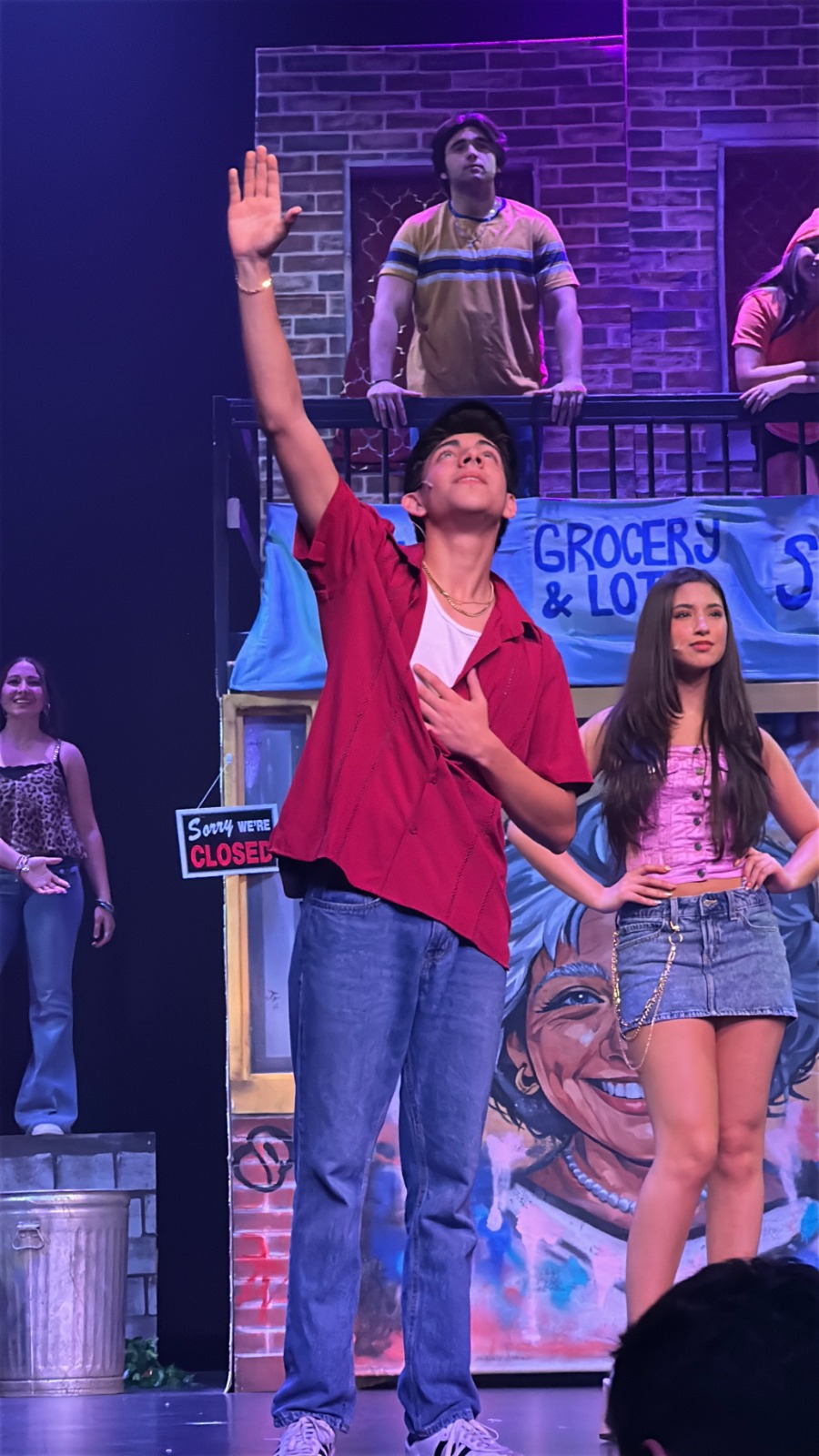
I promised last week to share with you the story of my son fulfilling his dream of being Usnavi in his school’s upcoming production of “In the Heights.”
It was a huge deal for him, but the experience had its own significance for us as his parents.
The years between 2017-2020 were particularly special for our little five finger family. We had these 3 little boys at their yummiest age. They were big enough to be somewhat independent, but young enough to live with childlike wonder.
It was around that time that my son discovered his love of acting. We spent a lot of our time in theater. (The 3 of them loved going to shows.) Orly developed a special love of Lin-Manuel Miranda and his shows.
At 9 years old, he’d dress up as Usnavi from In the Heights anytime we’d go see the show. We even took him to Broadway Con in New York because the original cast of In the Heights was presenting.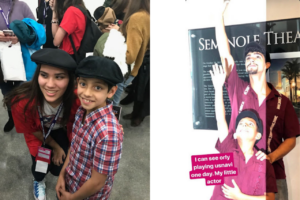
He’d also dress up his brothers as his supporting actors and on two different occasions he invited 2 girls that he was friends with (one from a theater program he did and another one who is a Cuban cousin) to dress up with him.
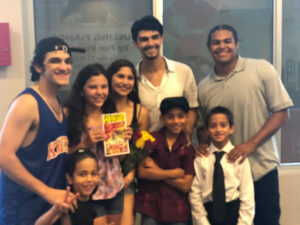
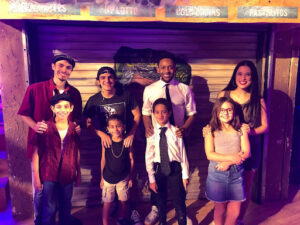
I savored every minute of these years and dreamt of the day my son was a young man playing this role on a main stage.
Well, if you’ve been with me for a long time, then you may already know that at some point my son made a move that I thought might be the beginning of the end of his acting journey. I spoke about it on episode 17 of the podcast, Getting Off the Bus.
But as it turns out, not all detours take you off path. When you take aligned action and trust your intuition, life leads you to what was meant for you all along.
Orly joined the theater class at Westminster High School in 10th grade, and shortly after their spring show the director announced that their 2026 play would be In the Heights.
This weekend, the kid finally got his chance to play Usnavi at 17 years old.
As I sat in the front row watching my son perform, my heart felt as if it would explode.
His talent. His presence. His hard work. It all came to life before my eyes.
Our theme this month is Mastery March, and I witnessed my son master a role that he has loved for so long.
This weekend he didn’t dress as Usnavi.
He became Usnavi.

And by the way, you may think, “Well, it’s not like he played on Broadway.” And you’d be right.
But you know what, he might as well have been on Broadway, because it made no difference to us.
Maybe one day my son will be in a big movie or on a big stage … and that will be a moment all on its own .., but this moment we had right now. This was everything to us.
When he was 9 rapping with Usnavi in the lobby of the theater.
When he was 17 rapping as Usnavi on the mainstage of his highschool theater.
Those moments are etched in my heart forever, and will spark bliss in my memories for years to come. And they both leave room to dream for the future also.
Life is both, and:
This is the best it’s ever been …
and the best is yet to come.
This is a life craft my son has devoted more than half his life to, and I am so incredibly lucky to have been chosen to help him steward the gifts he got in this lifetime.
As for this week’s podcast episode, I’m talking about a different kind of mastery. The kind of mastery that helps you build sustainable results in the areas that matter most to you (and how to use a team to help you build sustainable results in the areas you don’t want to master).
Thank you so much for going on this journey with me today. I’m absolutely giddy.
Sending you so much love,
|
P.S. Want even more support? The Well is my intimate coaching community where your vision becomes your lifestyle and we are now enrolling new members. |